(901) 538-6111

14 Questions to Ask on a Coworking Tour Before You Sign

The questions to ask on a coworking tour are mostly about money and exits, and they’re the ones people skip because asking feels rude. Ask them anyway. A good operator answers all fourteen without flinching, and the ones who dodge tell you what you need to know in about four seconds.
Here’s the list. Bring it on every tour you take, including ours.
Why these are the questions to ask on a coworking tour
Search around for complaints about flexible office space and you’ll find a pattern — not one company, a pattern. Exit fees nobody saw coming. Contracts that renewed themselves while the customer assumed they were month to month. A “notice period” that turned out to be three months, not thirty days. Billing disputes that ended up in collections over a space the person had already moved out of.
Most coworking spaces are nothing like that — plenty are small, locally run, and living on renewals. But the bad experiences are loud, and they’ve trained buyers to walk into every tour braced for a trap.
Fine. Be braced. The difference between a good operator and a bad one isn’t the furniture — it’s how straight the answer comes when you ask about money.
Money: what it actually costs
1. What’s the monthly number, all in?
Not the headline rate. The number that hits your card. Ask them to say it out loud.
Why this matters: Some operators quote a base rate and add service or amenity charges later. If the number you hear on the tour is the number on the invoice, they’ll say so immediately.
2. What’s not included?
Printing past some threshold. Meeting rooms past your allotment. Guest passes. Mail handling. Parking. A setup fee.
Why this matters: Every space draws the line somewhere, and that’s normal. What isn’t normal is finding out where the line is on your second invoice.
3. Is there a deposit, and what exactly gets it back?
How much, held how long, and returned under what conditions.
Why this matters: “Refundable” and “refunded” are different words. Ask what would cause you to lose it.
4. Can the rate change mid-term, and with how much notice?
Ask directly whether they can raise your rate while you’re a member, and if so, with how many days’ warning.
Why this matters: If plans are monthly, some ability to adjust pricing is reasonable. Thirty days’ written notice is reasonable. Finding out via invoice is not.
Getting out: the part people forget to ask
This is the section that saves people the most money, and the one they’re most embarrassed to raise. Ask it early — a place confident you’ll want to stay isn’t nervous about explaining how to leave.
5. What’s the notice period to cancel?
Thirty days is common. Sixty and ninety exist. Get the number, then ask where it’s written.
6. Does the agreement auto-renew, and how do I stop it?
Not “can I cancel” — how. Email? A form? Written notice to a specific address? Is there a window, like between 60 and 30 days before the renewal date?
Why this matters: Almost every ugly story you’ll read online lives right here. The renewal isn’t the problem — it’s a cancellation process the customer didn’t know existed until after the window closed.
7. What happens if I need to pause or downsize?
Business slows. Someone quits. You go from four desks to two. Ask whether you can move down a tier mid-term, and what that costs.
Why this matters: The reason you’re looking at coworking instead of a lease is flexibility. If the flexibility only runs upward, it isn’t flexibility — it’s a lease with better coffee.
What you actually get
8. How many meeting room hours are included, and what happens past them?
Get the number, the rate beyond it, and whether unused hours roll over.
Why this matters: Meeting room access is the most commonly misjudged part of a coworking plan. People budget for desks, then discover they need a room three times a week.
9. What’s the guest policy?
Can clients come in? Do they sign in? Is there a fee, a cap, a limit per month?
Why this matters: If you meet clients, this is the difference between a workspace and a business address you happen to sit in.
10. What about printing and mail?
Included, capped, or metered. Whether you can receive packages, whether someone signs for them, whether you can use the address publicly. Mail handling varies wildly between spaces, and it’s easy to assume wrong.
Day to day: the stuff you’ll live with
11. What are the staffed hours, and what happens outside them?
Is there a person on site, or keyless entry and a hope? Both models are fine. Knowing which one you’re buying is not optional.
Why this matters: If you need someone to greet a client, sign for a delivery, or fix a conference room TV at 2:30 on a Tuesday, staffed hours are the feature you’re paying for.
12. Where do I park, and where do my guests park?
Ask it in exactly those words, and get the answer in writing before your first client meeting.
Why this matters: Parking is where the tour experience and the daily experience diverge most sharply. Whatever the answer is, you want it in writing.
13. How loud is it at 2pm on a Tuesday — and can I come sit for an hour and find out?
Tours get scheduled at flattering times. Ask to come back during a normal working stretch, or ask for a day pass before you commit.
Why this matters: Noise is one of the most common reasons people leave a coworking space, and it’s the one thing a 20-minute tour can’t tell you. A good space will happily let you sit in it; hesitation is a data point.
The tell
14. Can I see the agreement before I decide?
That’s the whole question. Not a summary. The document.
If the answer is yes, here’s a copy, take it home — good. If it’s a version of “we’ll send that over once you’re ready to sign,” slow way down. There’s no legitimate reason you can’t read the terms first, and the operators who make that hard are the ones whose terms deserve the reading.
Read it for four things: the notice period, the renewal language, the fee schedule, and what happens if you’re late on a payment.
Reading the room while you’re standing in it
The answers matter. So does everything you notice while you’re getting them.
- Is it busy, or is it staged? Empty at 11am on a Wednesday tells you something. So does every desk being full — you might not get one.
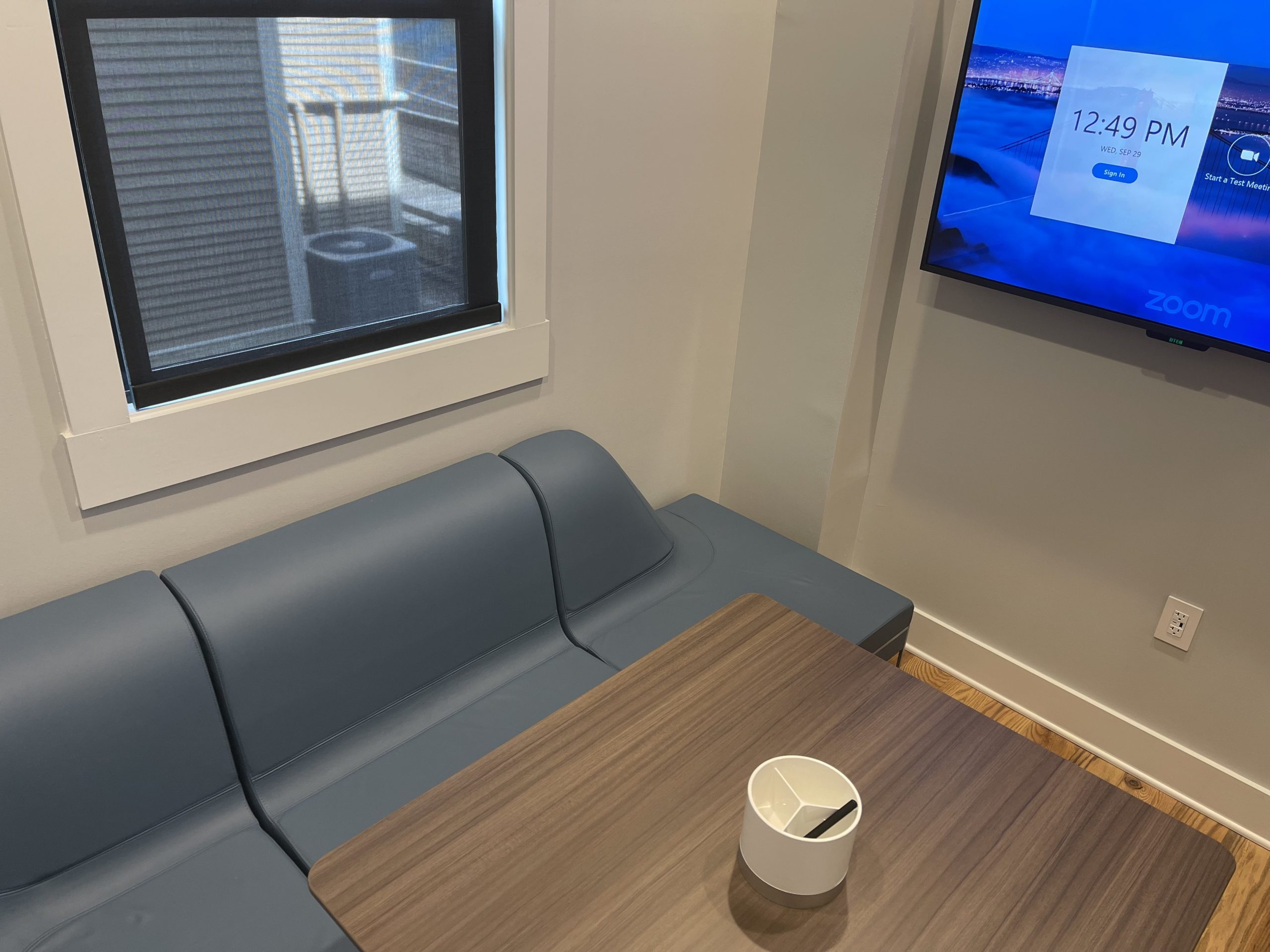
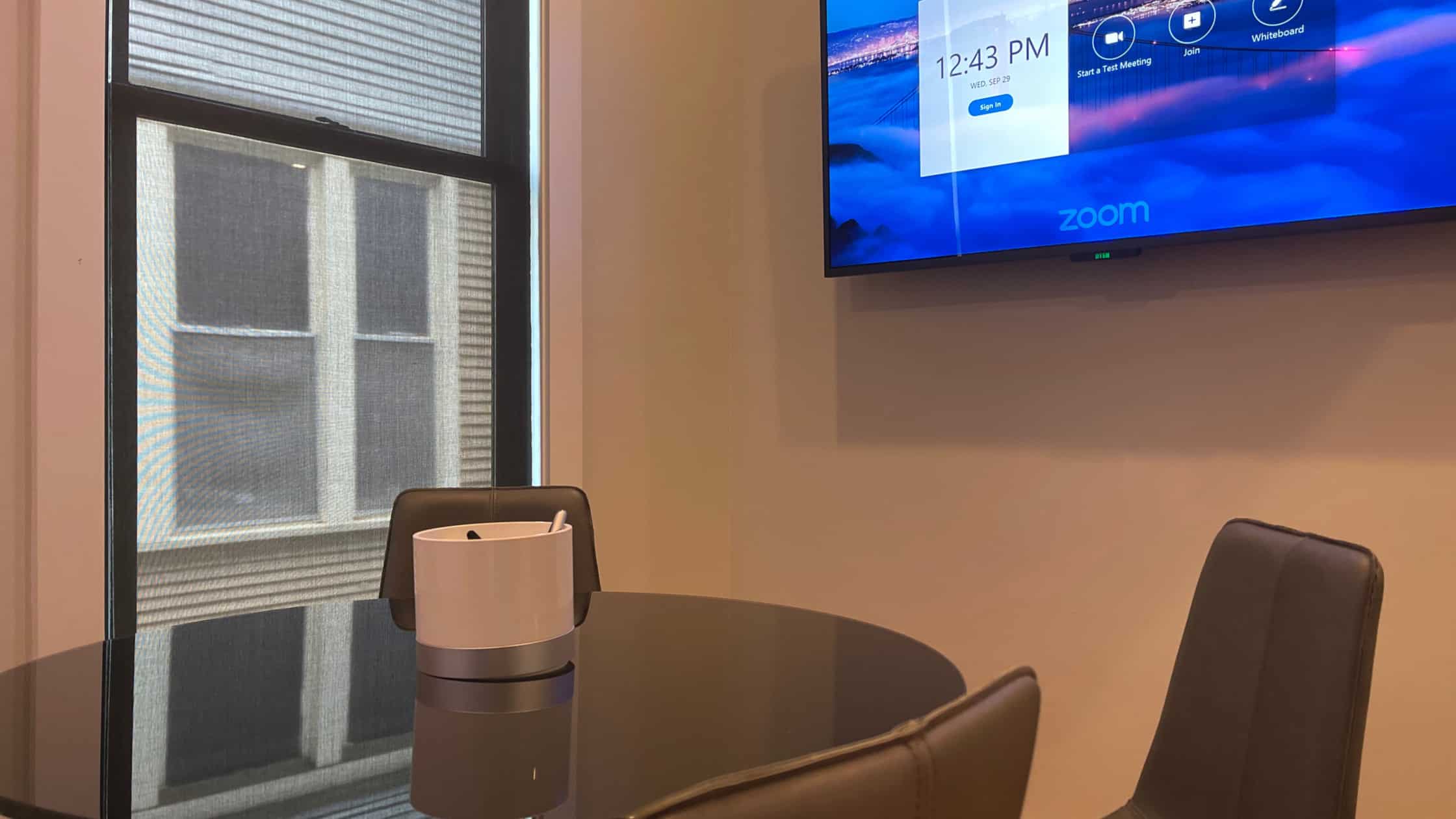
- Ask them to demo the AV. Not describe it. Demo it. “Can you throw my laptop up on that screen?” Ninety seconds, and it’s the most honest test in the building.
- Does anyone get greeted by name? Whether the person giving the tour knows the members says a lot about how the place runs when nobody’s being sold to.
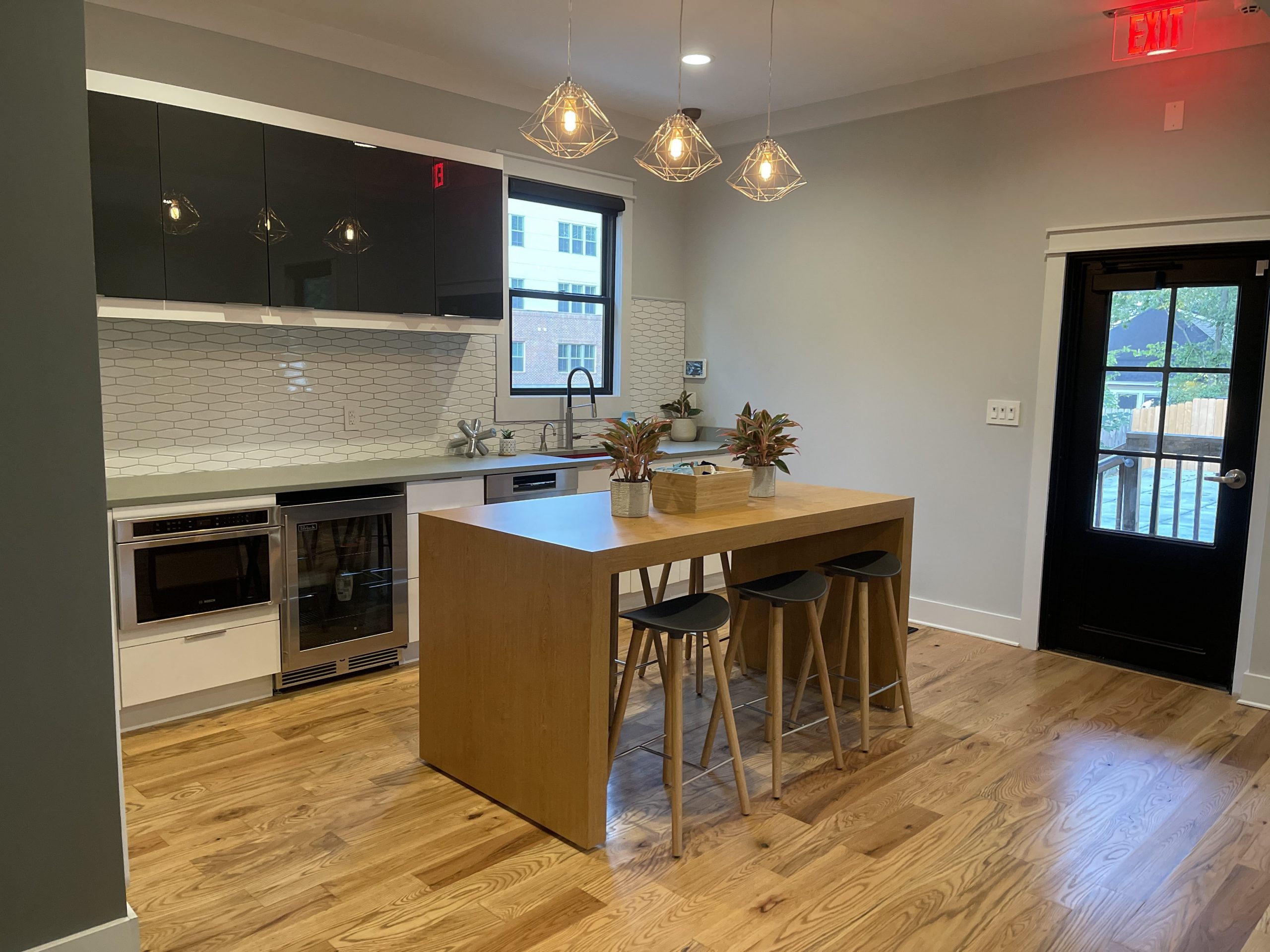
- Check the kitchen and the bathrooms. Nobody stages those.
- Sit in the chair you’d actually be sitting in. For eight hours a day, that’s not a small thing.
Point all fourteen at us
We’d rather you came in with the list than without it.
Tucker Collective is at 152 North Tucker Street, Suite 101, in Midtown Memphis. Tours can be booked online any time.
One thing to know before question one: our prices are published. A day pass is $29, a hot desk $129 a month, a dedicated desk $279 a month, and a small private office from $899 a month, with meeting-room hours built into every monthly plan. Ask what it costs, all in, and expect a straight answer.
If you’re weighing a few desks against something bigger for a team that’s in a couple of days a week, Office Space for Small Teams in Memphis (Without the Five-Year Lease) covers the sizing conversation in more detail.
Frequently asked questions
What should I ask before leasing a flexible office?
Start with the four that cost the most to get wrong: the all-in monthly number, what’s excluded from it, the notice period to cancel, and whether the agreement auto-renews. Then ask to read the agreement before you decide. Those four answers, plus the agreement itself, protect you from the situations people actually complain about online.
How do I choose the right coworking space for a startup?
Match it to how you work now, not how you plan to work. Count the meeting rooms you’ll need, not just the desks — startups consistently underestimate this. Then weigh commitment length heavily, because your headcount six months out is a guess and you want a plan that moves in both directions.
Is it rude to ask about exit terms on a first tour?
No, and the reaction is part of the information. Operators who deal with small businesses expect the question and answer it in a sentence. If asking how to leave makes the conversation tense, you’ve learned something useful for the price of one awkward moment.
Am I required to have insurance to use a coworking space?
Some spaces ask members to carry general liability coverage, especially for private offices or event bookings, and others don’t. It’s written into the agreement, so ask directly and read that section. If you’re unsure what your business already carries, that’s a question for your insurance agent rather than the person giving the tour.
Can I try a space before committing to a month?
Usually. Most spaces offer day passes, and a day pass is the best due diligence you can do. Come during a busy stretch, not a quiet one. An hour in the room at 2pm tells you more about noise, temperature, chairs and WiFi than any tour will.
What’s a normal notice period for a coworking membership?
Thirty days is the most common arrangement for monthly plans, though longer terms and private offices often carry more. The number matters less than knowing it, having it in writing, and understanding exactly how you give that notice.
Come test the list
Book a tour, bring all fourteen questions, and ask the hard ones first. If you’d rather just talk it through, call (901) 538-6111 — Monday through Friday, 8:00 AM to 6:00 PM.
Recent Articles

Where to Work During a Move or Home Remodel
Contractors in the kitchen. Boxes in the office. Internet that won’t be installed at the new place for two weeks. A move or a…Month-to-Month vs a 6-Month Office Term: Which Should You Choose?
One of the most common frustrations in coworking threads on Reddit is contract terms: surprise auto-renewals, notice periods nobody mentioned, and people stuck paying…Planning a Training Day: A Room Logistics Checklist
A training day lives or dies on logistics. The content can be great, but if people can’t find parking, the screen won’t connect, or…Board Meeting Space in Memphis for Nonprofits and Small Organizations
Many nonprofits and small organizations don’t have a boardroom. Board meetings end up in a member’s living room, a church fellowship hall or the…
Where to Hold a Job Interview When You Don’t Have an Office
“Places to do Zoom interviews? Libraries? Coworking?” comes up often on Reddit, from both sides of the table. Candidates need a quiet place to…How to Run a Client Pitch From a Rented Meeting Room
A pitch is not the time to find out the screen doesn’t connect or the room is too small. If you’re pitching from a…
Considering Coworking in the Memphis Area?
Come experience our advanced tech, amenities, and distraction-free space equipped for productivity.
schedule tour
Take Your Meeting To The Next Level
At Tucker Collective, we’re on a mission to bring meeting and workspaces to the 21st century.I used to have a big problem finding suitable space in the midtown and downtown area to have discreet meetings with clients. I recently discovered the Tucker Collective, and it will now be my office away from my office for which to hold a meeting. Don't go looking for a coffee shop for your next meeting, check out the Tucker Collective.Joseph Crone, Attorney

I used to have a big problem finding suitable space in the midtown and downtown area to have discreet meetings with clients. I recently discovered the Tucker Collective, and it will now be my office away from my office for which to hold a meeting. Don't go looking for a coffee shop for your next meeting, check out the Tucker Collective.Joseph Crone, Attorney
I used to have a big problem finding suitable space in the midtown and downtown area to have discreet meetings with clients. I recently discovered the Tucker Collective, and it will now be my office away from my office for which to hold a meeting. Don't go looking for a coffee shop for your next meeting, check out the Tucker Collective.Joseph Crone, Attorney
I used to have a big problem finding suitable space in the midtown and downtown area to have discreet meetings with clients. I recently discovered the Tucker Collective, and it will now be my office away from my office for which to hold a meeting. Don't go looking for a coffee shop for your next meeting, check out the Tucker Collective.Joseph Crone, Attorney