(901) 538-6111

Working From Home Loneliness Is Real. Here’s What Actually Helped.
Working from home loneliness usually isn’t dramatic. It’s flat. You realize at 4pm that you haven’t said a word out loud since standup, the day has had no shape since roughly 10am, and the commute you used to complain about was quietly doing something for you that you never noticed.
What helped, for most people who’ve been through it, wasn’t a productivity system or a bigger social calendar. It was small and boring: getting a reason to leave the house, giving the day edges, and being around the same handful of faces often enough that they stopped being strangers.
The version you’d recognize
You wake up eleven feet from your desk. You’re online before you’ve fully arrived anywhere. Lunch is standing at the counter reading Slack. The afternoon blurs. At some point your partner gets home, or your roommate does, or nobody does, and you say your first full sentence of the day.
None of that is a crisis. That’s the confusing part. Nothing is wrong. The work is going fine. You might even be doing your best work in years. It just feels like the days are stacking up without leaving a mark.
Why working from home loneliness creeps up on you
A few things happen at once, and none of them announce themselves.
There are no edges. No commute, no lobby, no “heading out.” Work starts when you open the laptop and ends when you stop resenting it. Without a boundary, the day expands to fill the room it’s in — which is also the room you sleep in.
Ambient contact disappears. Not conversations. The stuff around conversations: nodding at someone in the hallway, the two minutes before a meeting starts, overhearing a joke. That layer was doing more work than anyone credited it for, and remote work removes it completely.
Everything has to be scheduled. You can’t bump into anyone from your kitchen. Seeing a friend now requires planning, a calendar invite, and someone being the one who suggests it. That’s a lot of activation energy for something that used to happen by accident.
And the upside is real, which is why you keep going. No commute. Laundry done by 2pm. Focus you’d never get in an open office. You’re not going to trade that away, and you shouldn’t have to. The problem isn’t working from home. It’s working from home with nothing else in the day.
What people try, honestly assessed
Most of the standard advice does something. Very little of it does the specific thing you’re missing.
| What you try | What it actually does |
|---|---|
| The coffee shop rotation | Gets you out, gives you noise and a change of scene. But you’re still alone next to strangers, and the barista’s look at hour three is real. |
| Gym at lunch | Genuinely good for the shape of the day. Mostly a solo activity unless you join a class with the same people each week. |
| A walk | The most underrated one on the list. Fixes the flatness for about two hours. Doesn’t fix the isolation. |
| Virtual coworking / body doubling | Surprisingly effective for focus and for feeling accompanied. Some people love it. It’s also more screen, which is sometimes the problem. |
| A standing weekly lunch | One of the highest-return things you can do. The word that matters is standing — nobody has to organize it each week. |
| Joining something with a fixed time and place | Run club, choir, class, league, volunteering. Slow to pay off, then pays off a lot. |
The pattern in the things that work: they repeat, they involve the same people, and you don’t have to organize them.
The thing that actually helps: seeing the same faces
Here’s the part that surprises people. What fixes this isn’t friendship and it definitely isn’t networking. It’s low-stakes repeated exposure to the same people.
Recognizing a face. Getting the nod. “You were here Tuesday too.” Someone asking how the thing you mentioned last week turned out. None of that requires you to be interesting, or to have a pitch, or to be on.
That’s why the happy hour you’re dreading doesn’t help. A one-off event with new people is high effort and high performance — you show up, you’re charming for ninety minutes, you leave depleted and no closer to anyone. Familiarity is the opposite. It’s cheap, it compounds, and it happens whether you’re in the mood or not.
You don’t have to like these people or become friends with them. You just have to keep seeing them.
Where a shared workspace fits
This is where a place like ours comes in, and we’ll try not to oversell it, because it isn’t magic and it costs money.
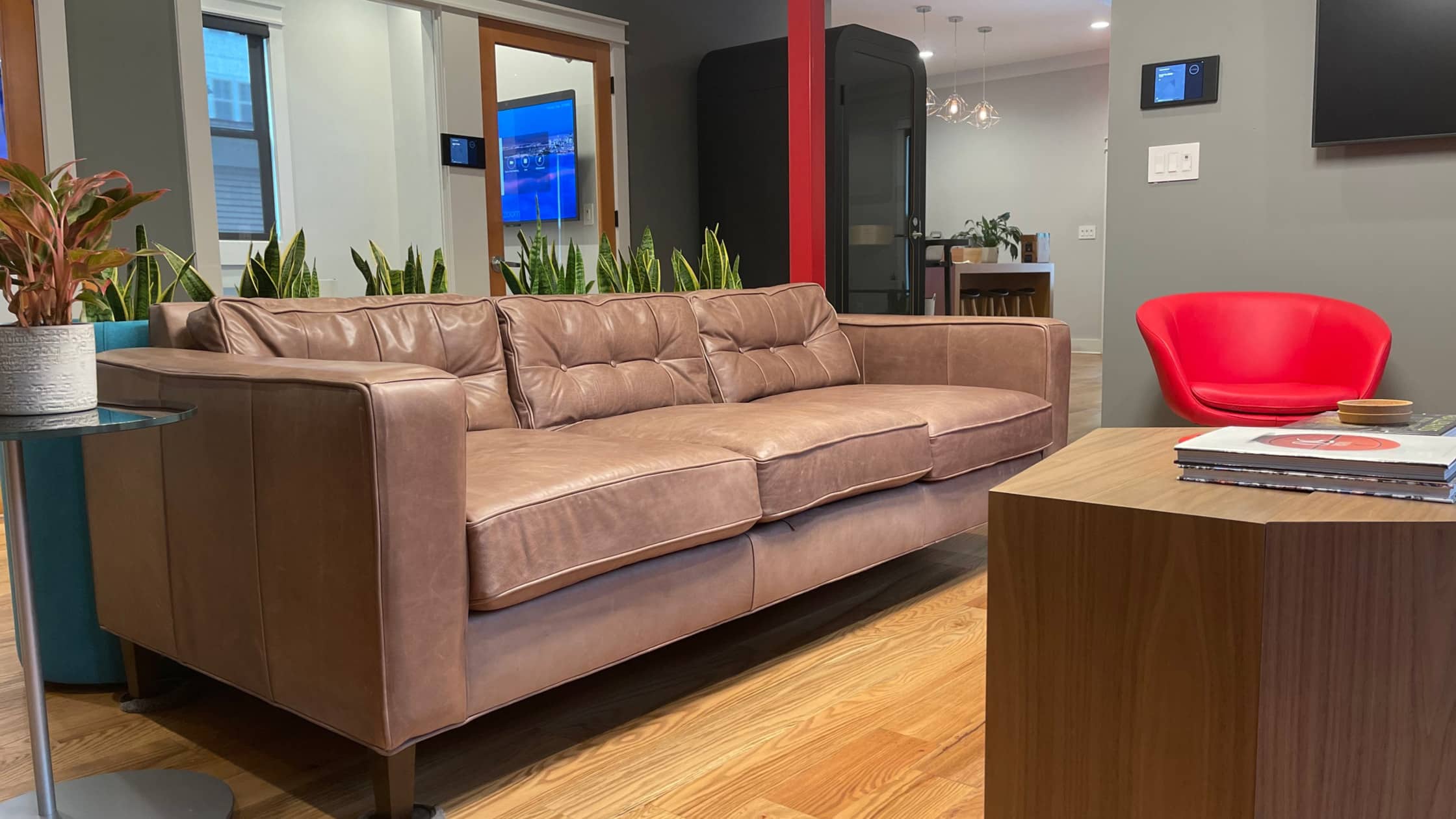
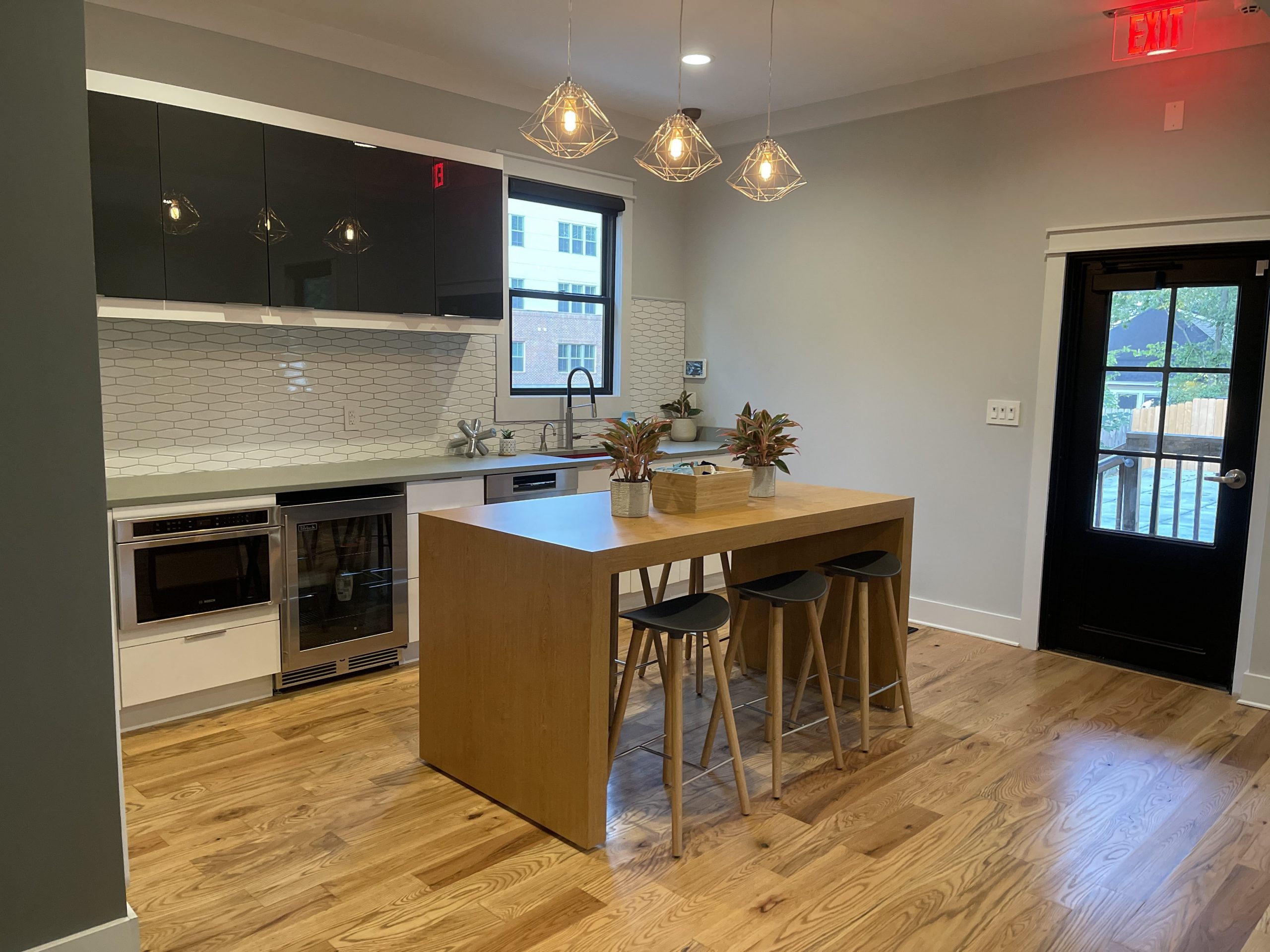
What it does well: it gives the day edges. There’s a leaving-the-house and a coming-home again, which sounds trivial and isn’t. And you see the same people at the same tables, week after week, without having to perform for any of them. That’s the low-stakes repetition, built into your Tuesday.
What it doesn’t do: make you social if you don’t want to be, replace friends, or fix a job you’ve quietly stopped liking. Plenty of people work from home happily for years and don’t need any of this. If that’s you, keep your setup. Nothing is wrong with you.
And if what you’re feeling is heavier than flat — if it’s been going on a long time and it’s touching more than your workday — a change of desk isn’t the answer, and talking to someone you trust is worth a lot more than a new place to open your laptop. That’s the whole aside.
Tucker Collective is in Midtown at 152 North Tucker Street, Suite 101, with coworking day passes, hot desks and dedicated desks, staffed Monday through Friday, 8:00 AM to 6:00 PM. If the practical questions matter more to you than the social ones — parking, WiFi, whether you can take a call — we wrote a whole separate post about that: Coworking in Memphis: Parking, WiFi, and the Practical Stuff Nobody Tells You.
The Memphis version of this
There’s a particular value to being somewhere you can run an errand from. Midtown is good for that. Overton Park is minutes away, and a lunch break there sends you back a different person. Cooper-Young and Overton Square are close enough for a proper lunch with someone instead of a sandwich over the sink. Crosstown is right there.
An errand-shaped reason to be somewhere counts more than people expect. “I’m going in Wednesday because I’m meeting someone for lunch after” is a much sturdier plan than “I should get out of the house more.”
If you want to test this, don’t commit to anything
The mistake is signing up for a month to answer a question you could answer in a day.
Try one day out of the house and pay attention to how the evening feels, not just the working hours. Then try a second day two weeks later, because the first time is novelty and the second time is data. If you go three or four times and find you’re recognizing people and looking forward to it, you’ve learned something real. If you don’t, you’ve spent very little and you know.
Day passes exist for exactly this. Use them before you think about anything monthly.
Frequently asked questions
Does joining a coworking space actually help with working from home loneliness?
For a lot of people, yes — but for a specific reason. It’s not the events or the community Slack. It’s that you leave the house, the day gets a start and an end, and you see the same faces regularly enough that they become familiar. If you go once a week and sit somewhere different every time, you’ll get less out of it.
What makes a coworking space feel social instead of just a desk?
Consistency and layout, mostly. Going the same days each week, sitting in roughly the same area, and being somewhere with a shared kitchen or coffee area where people actually pause. A concierge or on-site team who knows names speeds it up a lot. Being on headphones for eight hours slows it down.
Are coworking spaces good for meeting like-minded people?
They’re better for familiarity than for networking, and that’s usually what people actually need. You’ll meet people because you keep running into them, not because anyone organized an event. If your goal is specifically finding clients or collaborators, treat that as a separate project.
Does virtual coworking or body doubling work?
For some people it works well, especially for focus and for feeling accompanied while doing hard tasks. It’s low cost and easy to try. The catch is that it’s still a screen in the same room you’ve been in all week, so it may not touch the part of this that’s about leaving the house.
How do I know if I hate my job or just hate working from home?
Rough test: change the setting for a few days and see what happens. If working from a different room full of people makes the work feel fine again, the setting was the problem. If the dread shows up anyway, it was never about the desk.
If you want to try a day
No pitch here. If you want to see whether leaving the house changes anything, book a day pass or a tour at tuckercollective.com, or call (901) 538-6111 and ask what a Tuesday looks like. Come once, sit somewhere, see how the evening feels.
Recent Articles

Where to Work During a Move or Home Remodel
Contractors in the kitchen. Boxes in the office. Internet that won’t be installed at the new place for two weeks. A move or a…Month-to-Month vs a 6-Month Office Term: Which Should You Choose?
One of the most common frustrations in coworking threads on Reddit is contract terms: surprise auto-renewals, notice periods nobody mentioned, and people stuck paying…Planning a Training Day: A Room Logistics Checklist
A training day lives or dies on logistics. The content can be great, but if people can’t find parking, the screen won’t connect, or…Board Meeting Space in Memphis for Nonprofits and Small Organizations
Many nonprofits and small organizations don’t have a boardroom. Board meetings end up in a member’s living room, a church fellowship hall or the…
Where to Hold a Job Interview When You Don’t Have an Office
“Places to do Zoom interviews? Libraries? Coworking?” comes up often on Reddit, from both sides of the table. Candidates need a quiet place to…How to Run a Client Pitch From a Rented Meeting Room
A pitch is not the time to find out the screen doesn’t connect or the room is too small. If you’re pitching from a…
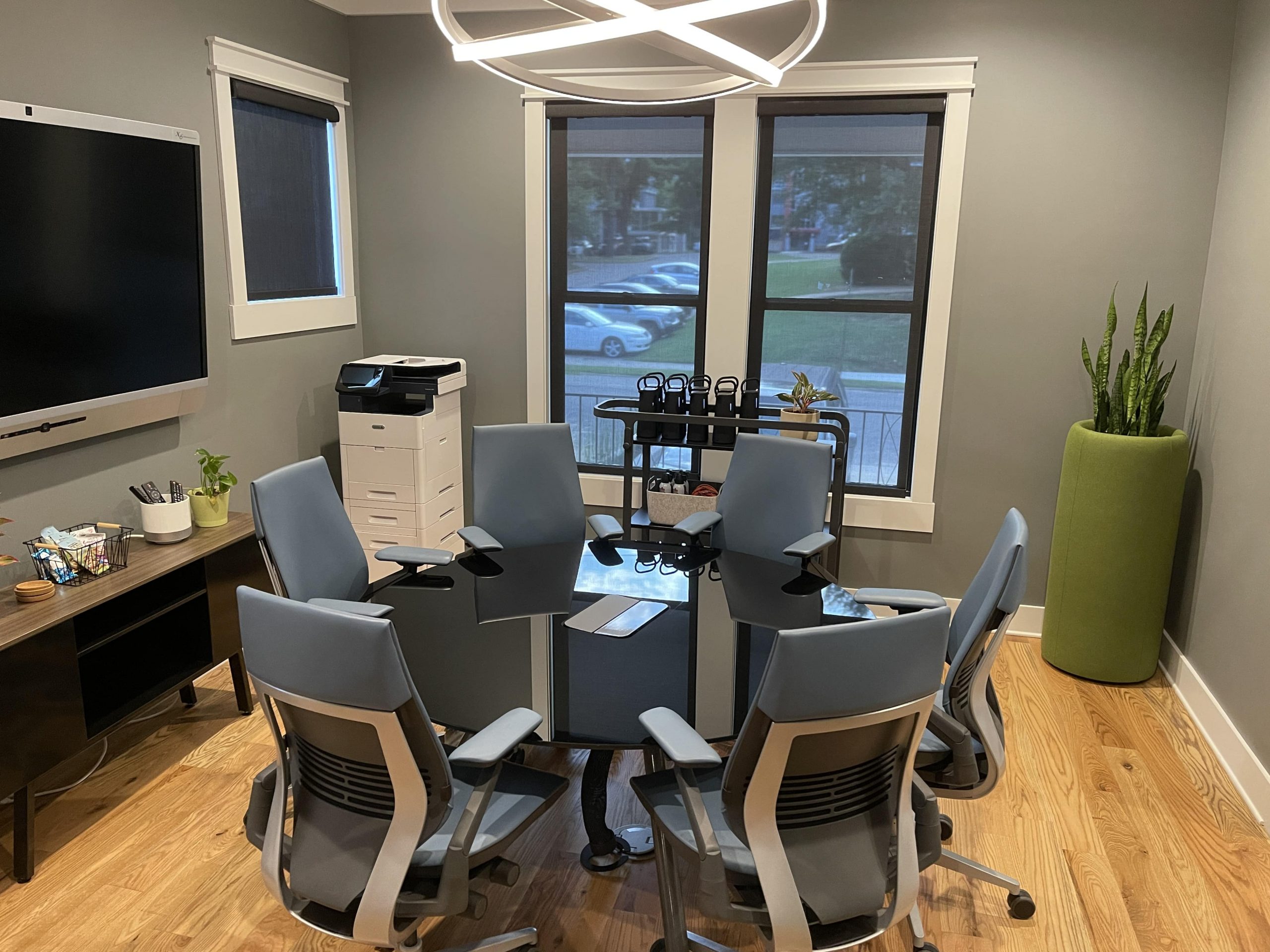
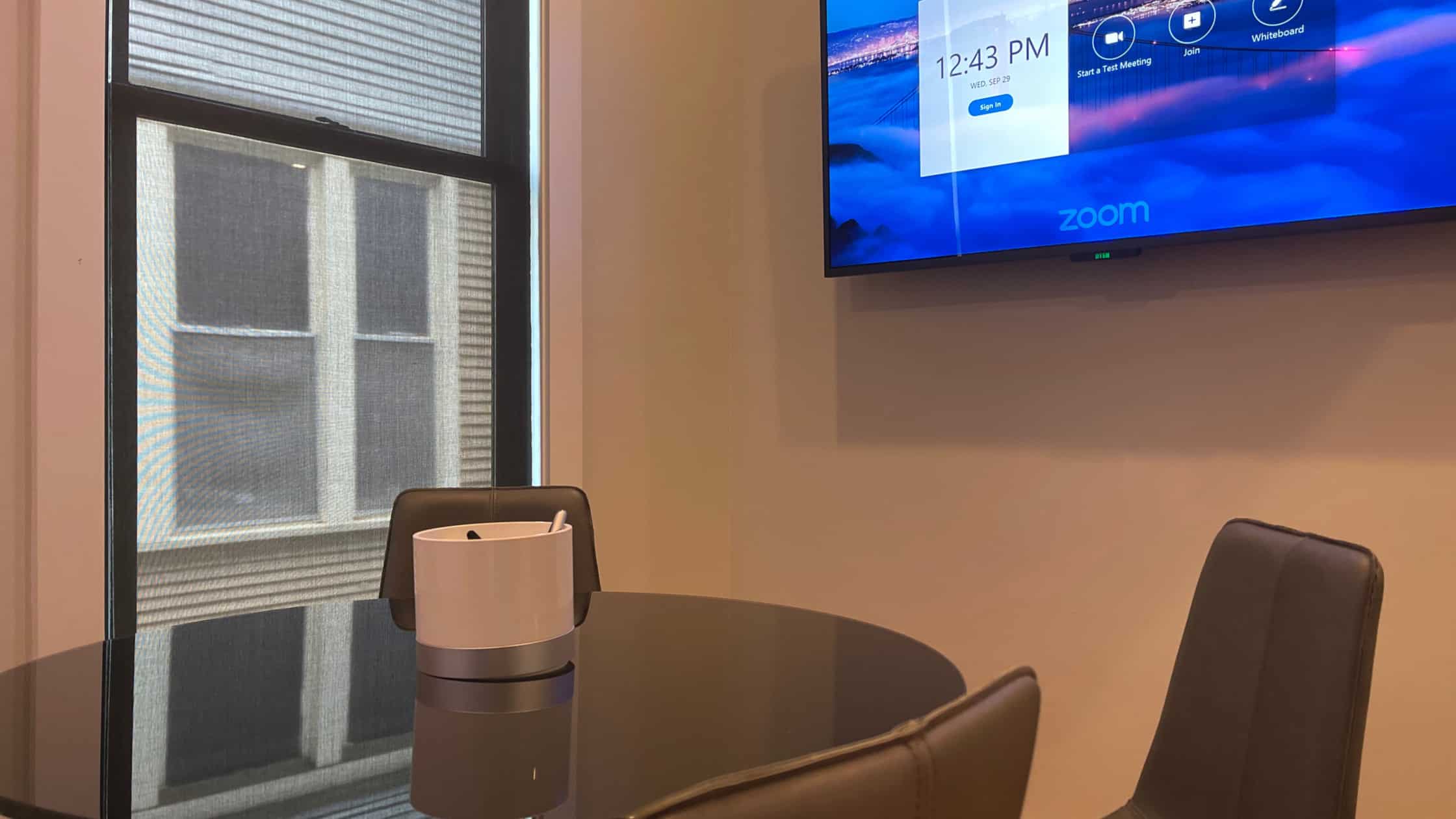
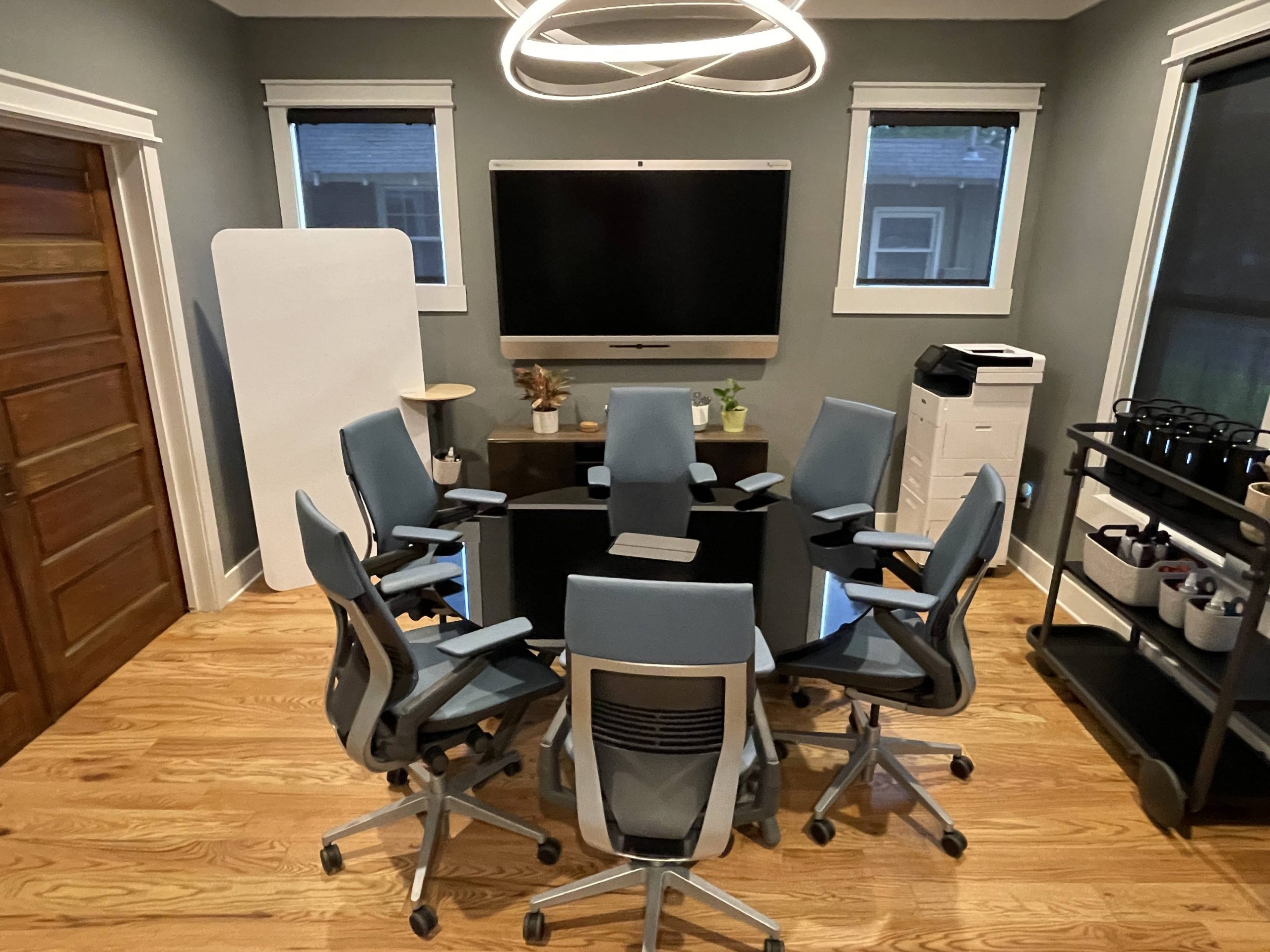
Considering Coworking in the Memphis Area?
Come experience our advanced tech, amenities, and distraction-free space equipped for productivity.
schedule tour
Take Your Meeting To The Next Level
At Tucker Collective, we’re on a mission to bring meeting and workspaces to the 21st century.I used to have a big problem finding suitable space in the midtown and downtown area to have discreet meetings with clients. I recently discovered the Tucker Collective, and it will now be my office away from my office for which to hold a meeting. Don't go looking for a coffee shop for your next meeting, check out the Tucker Collective.Joseph Crone, Attorney

I used to have a big problem finding suitable space in the midtown and downtown area to have discreet meetings with clients. I recently discovered the Tucker Collective, and it will now be my office away from my office for which to hold a meeting. Don't go looking for a coffee shop for your next meeting, check out the Tucker Collective.Joseph Crone, Attorney
I used to have a big problem finding suitable space in the midtown and downtown area to have discreet meetings with clients. I recently discovered the Tucker Collective, and it will now be my office away from my office for which to hold a meeting. Don't go looking for a coffee shop for your next meeting, check out the Tucker Collective.Joseph Crone, Attorney
I used to have a big problem finding suitable space in the midtown and downtown area to have discreet meetings with clients. I recently discovered the Tucker Collective, and it will now be my office away from my office for which to hold a meeting. Don't go looking for a coffee shop for your next meeting, check out the Tucker Collective.Joseph Crone, Attorney